
Iran's top negotiator, Parliament Speaker Mohammad Baqer Qalibaf, told Pakistani army chief Asim Munir during talks in Tehran on Saturday that the U.S. was not an honest party in negotiations to end their war and Iran would not compromise on its national rights, state television reported.
India’s trade minister to visit Canada with 150 business leaders to boost trade ties
Iran's top negotiator, Parliament Speaker Mohammad Baqer Qalibaf, told Pakistani army chief Asim Munir during talks in Tehran on Saturday that the U.S. was not an honest party in negotiations to end their war and Iran would not compromise on its national rights, state television reported.
May 23, 2026
Manoj Kumar/Reuters

A photo of the Indian flag courtesy of Unsplash via Wix.
Big G Media/Unsplash via Wix
DUBAI - Iran's top negotiator, Parliament Speaker Mohammad Baqer Qalibaf, told Pakistani army chief Asim Munir during talks in Tehran on Saturday that the U.S. was not an honest party in negotiations to end their war and Iran would not compromise on its national rights, state television reported.
A regional mediation push led by Pakistan aims to narrow differences between Iran and the U.S. after weeks of war that have left the vital waterway of the Strait of Hormuz closed to most shipping despite a nervous ceasefire, upending global energy markets.
Iranian state media reported that Munir had also met President Masoud Pezeshkian in the presence of Foreign Minister Abbas Araqchi, with whom he had two meetings, before flying out.
The talks reportedly centred on a 14-point document proposed by Iran, which it considers the main framework for the discussions, and messages exchanged between the two sides.
Qalibaf said Iran would pursue its "legitimate rights", both on the battlefield and through diplomacy, but added that it could not trust "a party that has no honesty at all", an allegation Iran has made several times before.
He said Iran's armed forces had rebuilt their capabilities during the ceasefire and that, if the United States "foolishly restarts the war", the consequences would be "more forceful and bitter" than at the start of the conflict.
Secretary of State Marco Rubio said on Friday that the United States has seen some progress towards a deal but that more work was required, while Iran's foreign ministry said the differences remained deep and significant.
Despite weeks of conflict, Iran has preserved its stockpile of near-weapons-grade enriched uranium as well as missile, drone and proxy capabilities that the United States and Israel say they aim to curb.
-Reporting by Jana ChoukeirEditing by Tomasz Janowski and Kevin Liffey/Reuter
TOP BUSINESS STORIES

Add a Title
Add a Title
Add a Title

Mediators say US and Iran close to extending ceasefire by 60 days — report
India’s trade minister to visit Canada with 150 business leaders to boost trade ties
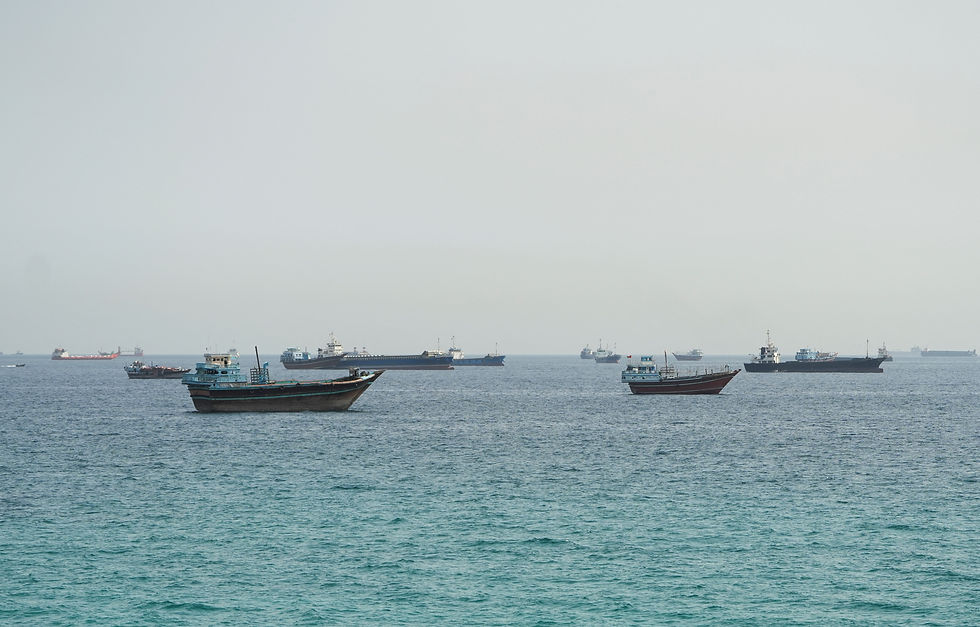
Iran's intensified closure of Strait of Hormuz piles misery on stranded sailors
LATEST NEWS
Add a Title
Add a Title
Add a Title

At least one dead in Pampanga building collapse, 21 missing

Russia hits Ukraine with Oreshnik missile in one of war's biggest attacks on Kyiv

Rescuers search for more than 20 trapped after Pampanga building collapse
PARALUMAN NEWS
GET IN TOUCH
desk@myparaluman.ph
Tektite Towers (East), Exchange Road
Ortigas Center. San Antonio 1600
City of Pasig, NCR, Philippines
+63284298877
MENU
© 2026 Paraluman News Publication