
FACTBOX: From Australia to Europe, countries move to curb children's social media access
Australia has become the first country to ban social media for children under 16, as governments worldwide move to tighten rules on platforms like TikTok, Instagram and YouTube over child safety concerns. A growing number of countries across Europe, Asia and the Americas are considering or enacting similar age restrictions and stricter parental consent laws.
REUTERS
June 8, 2026

A conceptual illustration of a smartphone displaying social media apps with a digital lock icon, symbolizing restricted social media access, courtesy of Wix.
Juan Paolo Dampog/Unsplash via Wix
GDANSK — Australia has become the first country to enforce a nationwide ban on social media access for children under 16, marking one of the most aggressive regulatory moves globally targeting Big Tech platforms such as TikTok, YouTube, Instagram, and Facebook. The law, which takes effect on December 10, 2025, requires platforms to prevent underage users from accessing their services or face penalties of up to A$49.5 million.
The Australian policy has intensified a global policy shift as governments weigh stricter controls on children’s access to social media amid growing concerns over mental health, online safety, and addictive platform design. A growing number of countries are introducing age limits, parental consent rules, or outright bans for minors.
In United Kingdom, the government is preparing measures to restrict access to “harmful” online platforms for children under 16 while allowing continued use of safer digital services. The proposal follows consultations with bereaved families and draws on policy developments in Australia.
China has implemented a “minor mode” system that enforces device-level and application-specific restrictions, including limits on screen time based on age categories, as part of its broader digital regulation framework for youth protection.
In Denmark, authorities have announced plans to ban social media use for children under 15, while allowing limited access for younger teens with parental approval from age 13.
France has advanced legislation through its National Assembly to prohibit social media access for users under 15. The measure still requires approval in the Senate and a final vote in the lower house before becoming law.
In Germany, children aged 13 to 16 may use social media only with parental consent, although child safety advocates argue that current safeguards remain insufficient.
Greece is nearing the announcement of a similar restriction, with officials indicating that a ban for children under 15 is under active consideration.
India is also exploring regulatory limits after senior officials described social media platforms as “predatory” in their engagement design, with some regional governments considering Australia-style restrictions.
In Italy, users under 14 require parental consent to create social media accounts, while older minors may register independently.
Malaysia has begun enforcing restrictions barring users under 16 from registering accounts on major social media platforms through its communications regulator.
Norway has proposed raising the digital consent age to 15 and is working toward legislation that would establish a firm minimum age for social media use, alongside parental authorization provisions.
In Poland, lawmakers are preparing legislation that would ban social media access for children under 15 and impose stricter obligations on platforms to verify user age.
Slovenia is drafting similar legislation that would prohibit social media access for users under 15, according to government officials.
Spain has signaled plans to strengthen regulation of social media and AI systems, including proposals for stricter age verification and a potential ban on access for users under 16.
Sweden has received a government-backed recommendation to set a minimum social media age of 15, with enforcement responsibilities placed on platforms through age verification systems.
In the United States, federal lawmakers are advancing legislation aimed at increasing protections for minors online. The proposed Kids Online Safety Act would require platforms to exercise greater care in product design to reduce harm to children and teenagers, complementing existing privacy protections under the Children’s Online Privacy Protection Act.
At the supranational level, the European Union is preparing new digital safety regulations targeting harmful platform design practices. The European Commission has signaled plans for the Digital Fairness Act, which will address addictive design features, while the European Parliament has supported proposals for stricter age-based access rules across member states.
Despite tightening regulations, major tech companies including TikTok, Meta, and Snapchat continue to set a minimum user age of 13, though enforcement remains inconsistent across regions. Child safety advocates argue that significant numbers of underage users continue to access social media platforms, underscoring ongoing enforcement and verification challenges worldwide. -Compiled by Christine Chen in Sydney, Hugo Lhomedet, Canan Sevgili, Paolo Laudani and Lucie Barbier in Gdansk Editing by Milla Nissi-Prussak, Bernadette Baum and Matt Scuffham/Reuters
LATEST SPORTS NEWS

SOCCER: Sibling rivals line up for different teams at World Cup

SOCCER: Tuchel says Bellingham must fight for starting spot at World Cup

CYCLING: Vollering says daring to lose helped her win women's Giro
LATEST LIFESTYLE NEWS

German super fan decorates street with hundreds of flags ahead of World Cup

Gaudí's legacy celebrated by papal visit a century after his humble death
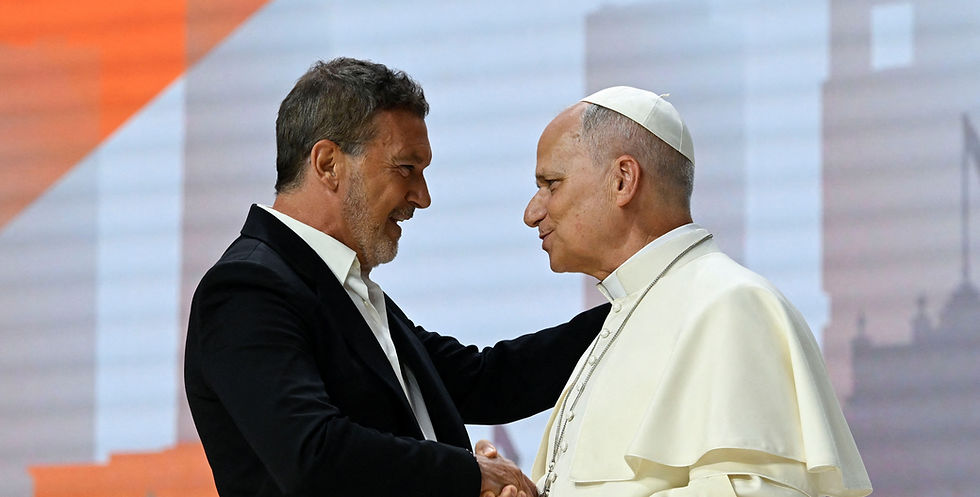
Madrid hosts Pope and Antonio Banderas for celebration of art, culture, economy and sport
GET IN TOUCH
desk@myparaluman.ph
Tektite Towers (East), Exchange Road
Ortigas Center. San Antonio 1600
City of Pasig, NCR, Philippines
+63284298877
MENU
© 2026 Paraluman News Publication