
US says it will speed development and use of AI for national security
The Trump administration is pushing for faster integration of artificial intelligence into military and intelligence operations while emphasizing safeguards against unlawful surveillance and censorship. The move comes amid growing debate over the role of advanced AI systems in national security.
Katharine Jackson and Karen Freifeld/Reuters
June 06, 2026
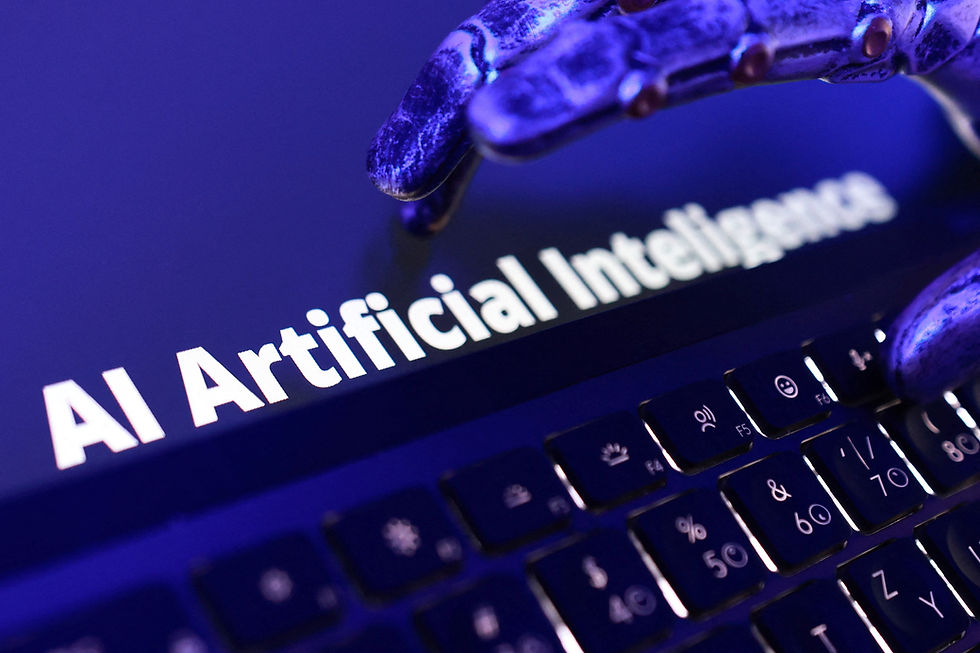
Words "AI Artificial Inteligence", keyboard, and a robotic hand in this illustration taken June 5, 2026.
Dado Ruvic/Reuters
The White House said on Friday it would accelerate the development and use of AI for national security applications, while stressing that the technology should not be used to carry out unlawful surveillance.
The Trump administration said earlier this week that it would ask leading AI developers to voluntarily submit their most capable models for government cybersecurity tests before releasing them to the public, as security fears mount in Washington over powerful new AI systems.
"Under my Administration, the United States can and will responsibly accelerate the use of AI across intelligence and warfighting domains in line with American values," President Donald Trump said in a national security memorandum.
Trump said Defense Secretary Pete Hegseth had 90 days to update an existing directive on the autonomy of weapons systems "to ensure the deliberate adoption of AI systems that respect the chain of command."
Trump added that AI technologies should not be developed or used by the national security enterprise "to censor free speech ... or conduct unauthorized or unlawful surveillance activities."
The memorandum "accelerates AI adoption from multiple vendors to prevent single points of failure, updates @DeptofWar's guidance on autonomous weapons systems to keep pace with the frontier, and ensures no entity can disable or degrade an AI system our warfighters depend on without prior approval," Michael Kratsios, director of the White House Office of Science and Technology Policy, wrote in a social media posting.
The memorandum comes in the wake of a clash between AI lab Anthropic and the Pentagon.
The Pentagon slapped a formal supply-chain risk designation on Anthropic in March after it refused to back down on bans for its Claude AI to power autonomous weapons and mass U.S. surveillance. The Pentagon said it should be able to use the technology as needed, as long as it complied with U.S. law.
The designation was an extraordinary rebuke by the administration of an American tech company that the Pentagon has relied on to support military operations, including in Iran, as Reuters has reported.
Anthropic did not immediately respond to a request for comment on the memorandum or on a meeting with AI executives that Trump said on Friday he planned to host as soon as next week.
-Reporting by Katharine Jackson and Karen Freifeld; Writing by David Ljunggren and Karen Freifeld; Editing by Caitlin Webber, Rosalba O'Brien and Nia Williams/Reuters
LATEST SPORTS NEWS

SOCCER: Sibling rivals line up for different teams at World Cup

SOCCER: Tuchel says Bellingham must fight for starting spot at World Cup

CYCLING: Vollering says daring to lose helped her win women's Giro
LATEST LIFESTYLE NEWS

German super fan decorates street with hundreds of flags ahead of World Cup

Gaudí's legacy celebrated by papal visit a century after his humble death
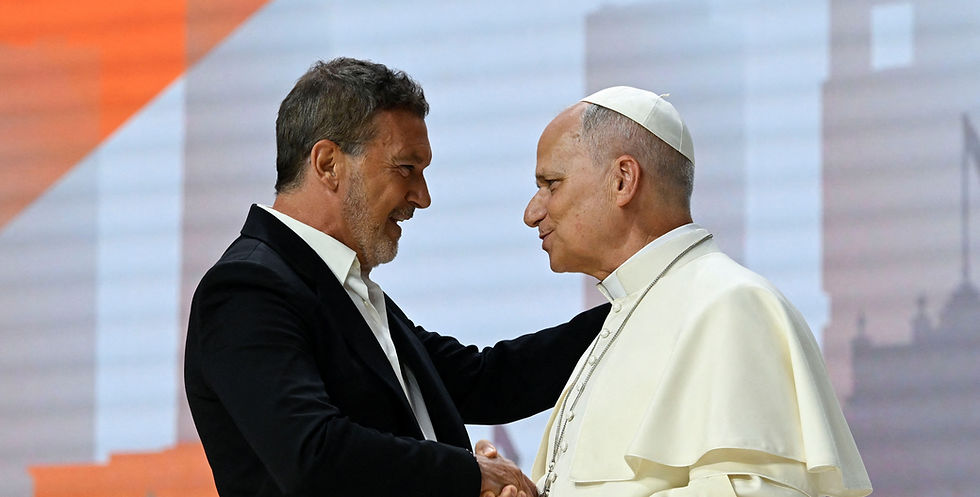
Madrid hosts Pope and Antonio Banderas for celebration of art, culture, economy and sport
GET IN TOUCH
desk@myparaluman.ph
Tektite Towers (East), Exchange Road
Ortigas Center. San Antonio 1600
City of Pasig, NCR, Philippines
+63284298877
MENU
© 2026 Paraluman News Publication