
The U.S. military has initiated a blockade of Iran's ports, escalating tensions and adding uncertainty to the crucial Strait of Hormuz. Despite the blockade, ongoing talks with Tehran raise hopes for a potential resolution, while oil prices dip below $100.
US begins Iran port blockade, oil prices ease on hopes for dialogue
The U.S. military has initiated a blockade of Iran's ports, escalating tensions and adding uncertainty to the crucial Strait of Hormuz. Despite the blockade, ongoing talks with Tehran raise hopes for a potential resolution, while oil prices dip below $100.
April 14, 2026
Trevor Hunnicutt and Parisa Hafezi / Reuters

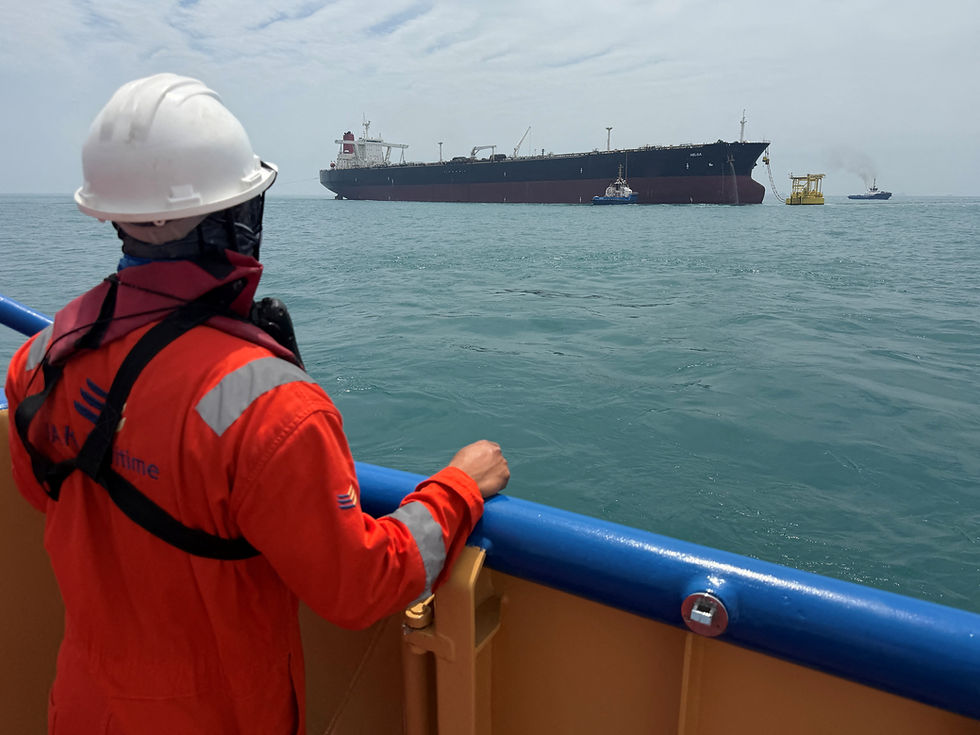
FILE PHOTO: A vessel at the Strait of Hormuz, off the coast of Oman’s Musandam province, April 12, 2026.
Stringer / Reuters
WASHINGTON/DUBAI – The U.S. military has initiated a blockade of Iran's ports, escalating tensions with Tehran and increasing uncertainty around the strategic Strait of Hormuz. While the blockade has raised concerns over global oil supplies, there is still hope for a diplomatic resolution, which has helped ease some pressure on oil prices, which fell below $100 per barrel on Tuesday.
The move came after a breakdown in talks over the weekend in Islamabad between the U.S. and Iran. However, a U.S. official stated that communication between the two countries continues, and efforts are underway to move toward a potential agreement. Pakistani Prime Minister Shehbaz Sharif echoed these sentiments, emphasizing that diplomatic channels remain open for resolving the ongoing conflict.
U.S. President Donald Trump commented that Iran had approached the U.S. for talks on Monday, expressing a desire for an agreement. However, Trump made it clear that the U.S. would not entertain any deal that allowed Iran to maintain or develop nuclear weapons.
Strait of Hormuz Blockade and Rising Tensions
Since the U.S. and Israel launched their military campaign against Iran on February 28, Iran has effectively closed the Strait of Hormuz to all non-Iranian vessels, allowing passage only under Iranian control and for a fee. The Strait is a vital shipping route through which nearly a fifth of the world’s oil and gas supplies are transported. Iran's move to impose a toll on passing vessels has sparked international concerns.
In response, Trump announced that the U.S. would block Iranian vessels and any ships paying the tolls imposed by Tehran. He also issued a stern warning against Iranian "fast-attack" ships, saying that any vessels approaching the blockade would be “immediately eliminated,” using the same lethal tactics employed against drug traffickers at sea. These tactics have reportedly led to the deaths of more than 160 people since they were first used in September.
Iran has threatened to retaliate against U.S. vessels and its Gulf neighbors if its ports are further threatened. The situation remains volatile, with Iran warning that no port in the Gulf or the Gulf of Oman would be safe if its own ports are targeted. Tehran has also branded the U.S. restrictions as “piracy” and insisted that the blockade violates the ceasefire agreement.
NATO Stands Back, Global Energy Security at Risk
The U.S. blockade, which is being enforced by the U.S. military's Central Command, applies to vessels entering or leaving Iranian ports in the Gulf and the Gulf of Oman. However, the U.S. has stated that neutral passage through the Strait of Hormuz will not be impeded. NATO allies, including Britain and France, have distanced themselves from the conflict, refusing to take part in the blockade. They have instead called for the reopening of the crucial waterway to ensure the free flow of global trade.
The blockade has created significant uncertainty about global energy security and could have broader implications for the international shipping industry. The U.S.'s unilateral actions have garnered little international support, further isolating Washington on the global stage.
Efforts for Diplomacy Amidst Military Tensions
Despite the breakdown in talks, Vice President JD Vance, who led the U.S. delegation, expressed optimism about the negotiations. Vance told Fox News on Monday that the U.S. had made significant progress in conveying to Tehran where it could make concessions and where it remained firm. He also noted that Iran had made some positive moves during the talks but had not gone far enough to meet the U.S.'s core demands, particularly regarding the removal of enriched nuclear material and the establishment of a verification mechanism.
The ceasefire between the U.S. and Iran, which halted six weeks of military airstrikes, is now under severe strain. With only a week left before the ceasefire expires, both sides face increasing pressure to reach a diplomatic solution before the conflict escalates further.
Ongoing Conflict in Lebanon
While the U.S.-Iran conflict rages, Israel continues its military operations in Lebanon, targeting Hezbollah positions. Israeli forces launched an attack on a key town in southern Lebanon on Monday, reportedly in an effort to seize control from Hezbollah. The Israeli military confirmed that an Israeli soldier was killed and three reservists were wounded during the clashes. Israel maintains that its actions against Hezbollah are separate from the broader ceasefire, but Iran has insisted that these attacks violate the truce.
The ongoing conflict in Lebanon, coupled with the escalating tensions in the Strait of Hormuz, is exacerbating instability in the region. Iran has called for reparations from several Gulf countries, accusing them of supporting the U.S.-Israeli campaign against Iran, which has further inflamed regional tensions.
Conclusion
As the U.S. blockade on Iranian ports enters its second day, the global community watches closely. The disruption of shipping routes, especially in such a crucial energy hub, could have significant ripple effects across international markets. While diplomatic efforts continue, the road to peace remains uncertain, and the potential for further conflict is ever-present. With a fragile ceasefire in place and increasing military engagement in Lebanon, the situation in the Gulf is rapidly approaching a critical juncture.
-Reporting by Reuters bureaux, Writing by Chang-Ran Kim; Editing by Lincoln Feast/Reuters
TOP BUSINESS STORIES

Add a Title
Add a Title
Add a Title

US STOCKS: Wall Street futures mixed as US-Iran stalemate keeps investors on edge

Hapag-Lloyd says one ship has crossed Strait of Hormuz

Europe has to make due with the money it has, says Germany's Merz
LATEST NEWS
Add a Title
Add a Title
Add a Title
Only five ships pass through Strait of Hormuz in 24 hours

Two forest fires prompt mass evacuations in Northern Japan

'Is this a ceasefire?' Lebanese skeptical about extended truce with Israel
PARALUMAN NEWS
GET IN TOUCH
desk@myparaluman.ph
Tektite Towers (East), Exchange Road
Ortigas Center. San Antonio 1600
City of Pasig, NCR, Philippines
MENU
EDITORIAL STANDARDS
© 2025 Paraluman News Publication