
CULTURE CURRENT: British broadcaster talks of dangers of AI-generated fake news
As one of Britain’s most recognizable broadcasters, Sky News presenter Yalda Hakim has spent nearly two decades reporting from the front lines of global politics and conflict, from her native Afghanistan to Ukraine and, more recently, Saudi Arabia, Qatar and Lebanon.
Yasmeen Serhan/Reuters
25 April 2026 at 10:59:23
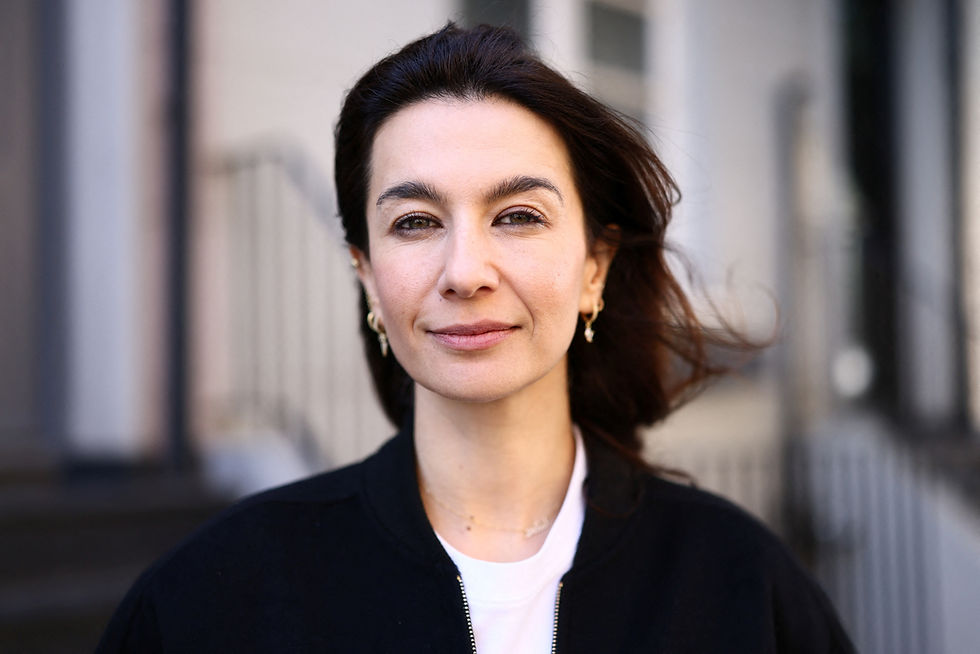
Broadcast journalist Yalda Hakim poses for a picture in Notting Hill, London, Britain, April 22, 2026.
Jack Taylor/Reuters
As one of Britain’s most recognizable broadcasters, Sky News presenter Yalda Hakim has spent nearly two decades reporting from the front lines of global politics and conflict, from her native Afghanistan to Ukraine and, more recently, Saudi Arabia, Qatar and Lebanon.
It's for this reason that few viewers would have questioned a deepfake video that resembled a real interview Hakim had conducted with the sister of the imprisoned former Pakistani Prime Minister Imran Khan when it went viral late last year. The fake clip, which showed the sister criticizing Pakistan's military chief, caused a controversy that was widely covered by the Indian and Pakistani press.
Speaking with Reuters in London, Hakim discusses the dangers posed by AI-generated disinformation and why trust — in journalism and what we see — has never felt more fragile to her.
This conversation has been edited for length and clarity.
You were born in Kabul, raised in Australia, and have spent much of your career broadcasting from here in Britain and around the world. What drew you to global reporting?
My family emigrated to Australia when I was three and a half years old. I remember when I was very, very little, my younger sister and I used to race through the house when Afghanistan would be mentioned in a news bulletin. My parents instilled in us an awareness of the world and the world that they had left behind and how lucky and fortunate we were as children of immigrants to have the access to education that we had, the access to freedoms.
When I started to talk — I think I was seven or eight years old — (about wanting) to do what they were doing in the documentary films that we would watch, what the reporter was doing, my dad said, “That’s journalism.” I became very curious about what that meant, and they would always encourage that. They would say to me, “If you want to become a journalist, you should read this and that and become aware of the world around you.”
(I) worked for a network in Australia and was covering the Arab Spring, and the head of the BBC saw my work and so I ended up here in the UK. After 11 years at the BBC, I moved to Sky News. I've been in this business for almost two decades and I can't remember a period like this.
Has your own family background informed your coverage or the empathy you bring to certain stories?
I remember being in high school and talking about girls in Afghanistan not getting an education (under the) Taliban. And when people ask me (today), "Why do you keep a day count now of the number of days that girls haven't been to school," it's because I remember at the time people would say, "How long have Afghan girls not gone to school?"
For me, then, for it to happen a second time around — another generation deprived of education, deprived of those basic human rights that they're entitled to — I ensured that I created a day count that the UN refers to and I spoke at the Security Council about it, as well. It became a symbol of what they were going through, and it was really important to me because knowing that these young girls my age didn't (have access to education) and then thinking that dark period was over and then finding several decades later the mothers of these children who thought that their children would never experience this suddenly (are going) through the same thing that they did, I guess the only thing that I felt I could do was to remind the world every single day (of) the fact that the lights had been turned off on them.
When you look at today’s global crises, do you think Western audiences have become more empathetic to displacement and trauma, or more numb to it?
When you're deeply in it yourself, you see it everywhere, right? And I see a lot of empathy. I see in the interactions I have — people are curious and they're angry and they're frustrated and suddenly you realize that something that happened somewhere else is impacting you where you are. And therefore, news fatigue or saying “it's really not my issue” is not something that people can afford to do or be.
And I know it's heavy. International news has always been difficult and hard to process day in, day out, and people want an escape. That's why algorithms and social media channel people into certain directions based on the kind of coverage and sometimes we wonder who's watching and who's processing the information we're giving.
But I do sense a lot of interest in foreign news. You can see this blockade of the Strait of Hormuz and the impact it's having on the global economy ... and my grocery prices and inflation and my ability to put food on the table for my children and pay for my bills. These are all things that impact people on a day-to-day basis. And they want to know more about what's going on rather than less.
You’ve spoken publicly about being targeted by AI deepfake photos and videos, including one that convincingly altered your reporting and spread widely online. What was the most unsettling part: the technology itself, or how quickly people believed it?
I had interviewed Imran Khan's sister about his incarceration and his lack of access to his lawyers, his physician, his deteriorating health, and how angry the family is about it. It went viral. It was broadcast all over the Pakistani channels and it was being viewed millions of times on social media.
So when the fake one appeared a day later, I just assumed it was that same interview. Imran Khan's sister got in touch with my producer and said, “You know, this deep fake has been created of us.” I watched it, and I was shocked by how advanced the technology was. I knew it wasn't me, but I can see how to the naked eye, someone who doesn't know my mannerisms would think that was (a genuine video of) me.
And it wasn't just regular people believing this interview — the defense minister of Pakistan commented on it. News channels in India picked it up because (in the deepfake) I asked something about the recent war between India and Pakistan, and she is disparaging of the field marshal, Asim Munir, and says if Imran Khan was in power, we'd never be at war with India. So it turned into a news story based on an interview that wasn't real. And we're talking about two nations, nuclear powers, who were just at war a few months earlier. So it's not a hypothetical that that whole thing could have actually spiraled. For me, it was a taster of a world that we will have to deal with.
In your case, those deepfakes didn’t just distort facts — they weaponized your credibility as a journalist. Do you think audiences fully grasp how easily “trusted faces” can now be hijacked?
The attack on journalists is almost more terrifying than when they go after world leaders because sometimes you think, I haven't seen that across the board in the news. So let me triple check that. And actually, that doesn't look right.
But if you don't know a journalist (and) there are suddenly quotes out there or a line of questioning that's just not real, the average person might start to believe some of this stuff. But again, it goes back to the point around the importance of journalism in this volatile period. It's not just about seeking the truth, but it's also dispelling the fake news, the disinformation, the AI tools that are out there that are working against not just our craft, but who we are as a society.
The perspectives expressed in Culture Current are the subject’s own and do not necessarily reflect the views of Reuters News.
-Editing by Aurora Ellis/Reuters
TOP ENTERTAINMENT STORIES

‘Schmigadoon!’ wins best musical on Broadway's biggest night

Major winners of Broadway's 2026 Tony Awards
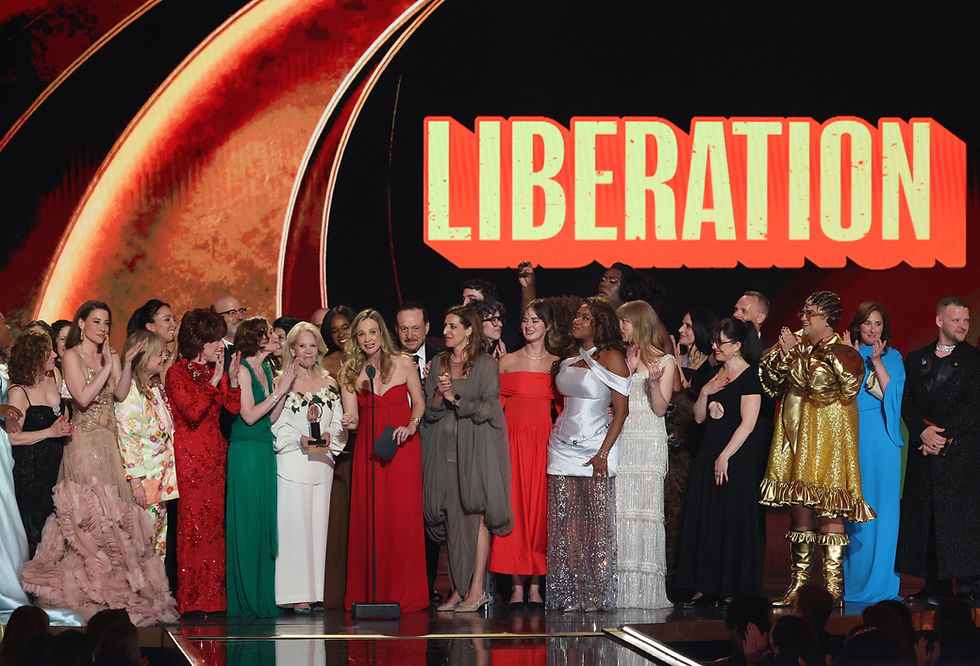
2026 Pulitzer Prize winner 'Liberation' wins Tony Award for best play
LATEST NEWS

At least 15 feared dead , 129 injured after magnitude 7.8 earthquake in Mindanao

LOOK: Mindanao sustains heavy damage after 7.8 magnitude earthquake
Authorities verifying reports of five deaths from magnitude 7.8 quake in General Santos
GET IN TOUCH
desk@myparaluman.ph
Tektite Towers (East), Exchange Road
Ortigas Center. San Antonio 1600
City of Pasig, NCR, Philippines
+63284298877
MENU
© 2026 Paraluman News Publication