
Vaccines are a national security issue, says global health official
Global health leader Richard Hatchett warns that rising anti-vaccine sentiment is a national security threat, urging governments to fund Cepi’s $3.6 billion plan to prepare for future pandemics.
Jennifer Rigby/Reuters
February 13, 2026

FILE PHOTO: A child receives a dose of Moderna Spikevax (COVID-19 Vaccine, mRNA) at Skippack Pharmacy in Schwenksville, Pennsylvania, U.S. October 2, 2025.
Hannah Beier/Reuters
Vaccines are a matter of national security, a leading global health figure said this week, warning that rising anti-vaccine sentiment worldwide could undermine efforts to fight future pandemics.
Richard Hatchett, who leads the Coalition for Epidemic Preparedness Innovations, or Cepi – a partnership of governments and philanthropies that was among the first to fund COVID-19 vaccines in January 2020 – said epidemics and pandemics remained a key global threat.
"This is a security problem, not just a global health problem, not just a development problem," he said.
NATURAL VIRUSES, LAB LEAKS, AND BIOLOGICAL THREATS
That message is central to Cepi's new push to raise $3.6 billion for its work from 2027 to 2031, Hatchett said. The coalition already has $1.1 billion in existing resources, so it is asking for a further $2.5 billion to help speed up the development of vaccines targeting pandemic and epidemic threats.
"We need to acknowledge the threats that Cepi is developing the capabilities to prepare for," he said, citing naturally emerging viruses, lab accidents and the risk of biological threats deliberately engineered by bad actors, potentially enabled by advances in artificial intelligence - advances that could also help speed up response efforts.
He said that message resonated with governments even as memories of the pandemic fade and the funding climate became more challenging, with rich countries - led by the U.S. - pulling back from aid.
The Trump administration has cut all funding in particular for Gavi, a group that helps buy vaccines for the world's poorest countries. President Donald Trump's Health Secretary, Robert F Kennedy Jr, has long promoted anti-vaccine views that contradict scientific evidence.
"I am concerned about the politicization of vaccine policy in the U.S.," Hatchett said, adding that broader anti-vaccine sentiment could also weaken uptake in future pandemics.
Last year, the U.S. cancelled more than $700 million in funding for Moderna's mRNA bird flu vaccine for humans. Cepi stepped in with $54.3 million to support late-stage development of the shot in December.
Hatchett, who will travel to the U.S. for talks in the coming weeks, said Washington understood the threat posed by epidemics and pandemics, and he expected it to remain a strong partner. He added that the country has continued to work with Cepi under the Trump administration, including on recent outbreaks of Marburg virus disease in Rwanda and Ethiopia.
-Jennifer Rigby/Reuters
TOP HEALTH STORIES

WHO chief to meet Congo president, as aid group warns Ebola likely spread undetected for months

Ebola recoveries bring signs of hope in DRC as suspected cases emerge outside Africa

Prostate cancer drug reduces risk of cancer spread and death in late-stage study
LATEST NEWS

53 rescuers work together to save man stuck in deep Italian cave

Israel's Netanyahu orders attacks in Beirut's southern suburbs
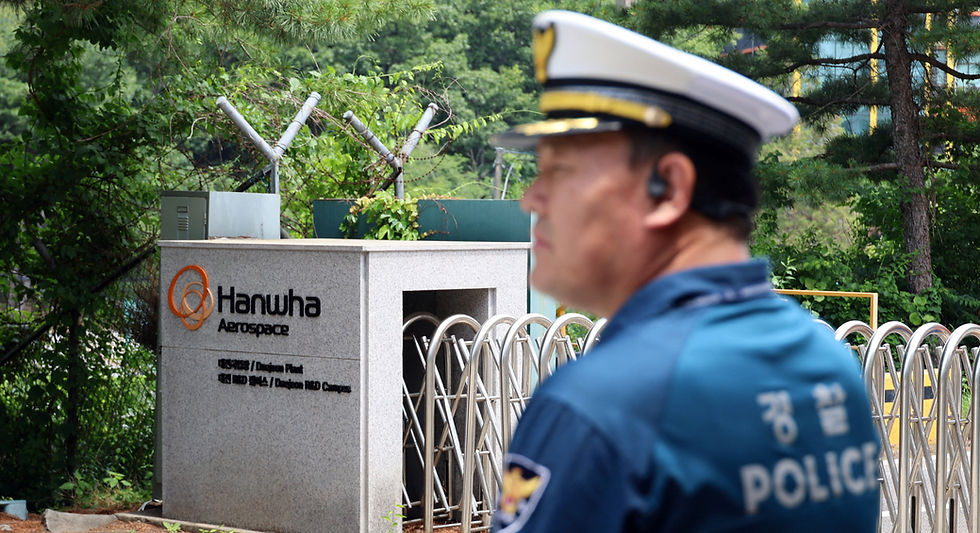
Five dead, two injured in fire at Hanwha Aerospace plant in South Korea
GET IN TOUCH
desk@myparaluman.ph
Tektite Towers (East), Exchange Road
Ortigas Center. San Antonio 1600
City of Pasig, NCR, Philippines
+63284298877
MENU
© 2026 Paraluman News Publication