
China flexes energy leverage as the Philippines, US start annual war games
China's People's Daily editorial suggests that energy assistance for the Philippines may depend on its military cooperation with the U.S., accusing Manila of hypocrisy for seeking emergency supplies while hosting joint military drills near Taiwan. This reflects Beijing's growing use of energy leverage in diplomatic disputes.
Joe Cash / Reuters
April 21, 2026

Oil storage tanks and facilities of a Sinopec plant in Shanghai, China, March 26, 2026.
Go Nakamura / Reuters
BEIJING – China has suggested that its energy assistance to the Philippines may be contingent upon Manila's cooperation in joint military drills with the U.S. and its other allies, according to a recent editorial in China's top newspaper. The article highlighted Beijing’s stance on leveraging its strategic reserves in diplomatic disputes, underscoring China's growing influence over critical energy supplies.
In an editorial titled “The Philippines should create conditions for deepening cooperation,” the Communist Party’s official People's Daily accused the Philippines of hypocrisy for seeking emergency energy supplies while preparing to host major military exercises involving over 17,000 troops on a Philippine island near Taiwan. These drills are set to take place just days after the Philippines called for energy aid.
The editorial pointed to China’s position as holding the world’s largest strategic oil inventories, emphasizing the country’s leverage in global energy markets. "These blatantly contradictory words and deeds expose the opportunistic nature of Philippine politicians," the commentary stated. It was published under the pen name “Zhong Sheng,” meaning “Voice of China,” and often reflects the views of top Chinese officials on foreign policy.
“How can [the Philippines] justify acting with complete disregard for the interests of its neighbors and yet expect them to come to its aid in a critical moment?” the piece questioned, calling on the Philippines to "create the right conditions" for improved bilateral ties.
This commentary suggests that China may begin using energy supply assistance as a bargaining chip in disputes with nations it perceives as adversaries. Analysts note that this could echo China's past actions, such as curtailing critical mineral exports to Japan amid political tensions.
The Philippines and China have been at odds over competing territorial claims in the South China Sea, particularly surrounding the Second Thomas Shoal. This location, where the Philippines grounded a warship in 1999, remains a point of contention as the Philippines conducts regular resupply missions for sailors stationed there. The shoal lies within the Philippines’ exclusive economic zone and is roughly 808 miles from mainland China.
In a wider context, China, a leading exporter of fertilizers and fuels in Asia, recently scaled back exports of refined fuels to its neighboring countries. In March, reports emerged that China had imposed a ban on fuel exports to prioritize domestic needs. This decision has raised concerns about the country’s energy security and its ability to influence regional energy markets.
Eric Olander, co-founder of the China-Global South Project, commented on the editorial, noting that while the piece hinted at an implied quid pro quo, it focused more on criticizing the Philippines for seeking economic relief while simultaneously escalating tensions. “It wants to rely on China for economic 'emergency relief' while also stirring up trouble,” Olander stated.
In a similar vein, last month, Chinese officials offered Taiwan energy stability in exchange for acceptance of Beijing’s rule over the island. This move reflects China’s broader strategy to assert control over regions it deems strategically important.
China’s energy advantage was further underscored by People's Daily, which highlighted Beijing’s decision to honor fertilizer contracts with the Philippines despite the fuel export ban. However, it also expressed dissatisfaction over the Philippines' military drills. The exercises, which will run until May 8, are known as Balikatan (shoulder-to-shoulder) and involve forces from Australia, Canada, France, and New Zealand. These exercises include maritime strike drills on Itbayat Island, located just 155 km from Taiwan, and counter-landing drills in Zambales, about 230 km from the contested Scarborough Shoal, which is controlled by China.
Ruby Osman, a senior policy adviser at the Tony Blair Institute, noted that China's strategy of stockpiling energy reserves during the early 2000s had proven advantageous, especially in the face of energy disruptions. She also warned, however, that the country's energy security is not without challenges. "China is still burning through strategic reserves they’d rather not have to, with limited control over the duration and scale of the disruption," she explained.
Despite its energy reserves, China’s vulnerability was exposed recently when President Xi Jinping publicly called for the reopening of the Strait of Hormuz during a Monday phone call with Saudi Arabia’s Crown Prince Mohammed bin Salman. The $19 trillion Chinese economy heavily depends on open sea lanes for its export-driven growth, and any disruption in these critical shipping routes poses significant risks.
This complex web of energy, geopolitical tensions, and military maneuvers underscores the delicate balance China is seeking to maintain in its regional relations.
-Reporting by Joe Cash; Editing by Kate Mayberry/Reuters
BEIJING – China has suggested that its energy assistance to the Philippines may be contingent upon Manila's cooperation in joint military drills with the U.S. and its other allies, according to a recent editorial in China's top newspaper. The article highlighted Beijing’s stance on leveraging its strategic reserves in diplomatic disputes, underscoring China's growing influence over critical energy supplies.
In an editorial titled “The Philippines should create conditions for deepening cooperation,” the Communist Party’s official People's Daily accused the Philippines of hypocrisy for seeking emergency energy supplies while preparing to host major military exercises involving over 17,000 troops on a Philippine island near Taiwan. These drills are set to take place just days after the Philippines called for energy aid.
The editorial pointed to China’s position as holding the world’s largest strategic oil inventories, emphasizing the country’s leverage in global energy markets. "These blatantly contradictory words and deeds expose the opportunistic nature of Philippine politicians," the commentary stated. It was published under the pen name “Zhong Sheng,” meaning “Voice of China,” and often reflects the views of top Chinese officials on foreign policy.
“How can [the Philippines] justify acting with complete disregard for the interests of its neighbors and yet expect them to come to its aid in a critical moment?” the piece questioned, calling on the Philippines to "create the right conditions" for improved bilateral ties.
This commentary suggests that China may begin using energy supply assistance as a bargaining chip in disputes with nations it perceives as adversaries. Analysts note that this could echo China's past actions, such as curtailing critical mineral exports to Japan amid political tensions.
The Philippines and China have been at odds over competing territorial claims in the South China Sea, particularly surrounding the Second Thomas Shoal. This location, where the Philippines grounded a warship in 1999, remains a point of contention as the Philippines conducts regular resupply missions for sailors stationed there. The shoal lies within the Philippines’ exclusive economic zone and is roughly 808 miles from mainland China.
In a wider context, China, a leading exporter of fertilizers and fuels in Asia, recently scaled back exports of refined fuels to its neighboring countries. In March, reports emerged that China had imposed a ban on fuel exports to prioritize domestic needs. This decision has raised concerns about the country’s energy security and its ability to influence regional energy markets.
Eric Olander, co-founder of the China-Global South Project, commented on the editorial, noting that while the piece hinted at an implied quid pro quo, it focused more on criticizing the Philippines for seeking economic relief while simultaneously escalating tensions. “It wants to rely on China for economic 'emergency relief' while also stirring up trouble,” Olander stated.
In a similar vein, last month, Chinese officials offered Taiwan energy stability in exchange for acceptance of Beijing’s rule over the island. This move reflects China’s broader strategy to assert control over regions it deems strategically important.
China’s energy advantage was further underscored by People's Daily, which highlighted Beijing’s decision to honor fertilizer contracts with the Philippines despite the fuel export ban. However, it also expressed dissatisfaction over the Philippines' military drills. The exercises, which will run until May 8, are known as Balikatan (shoulder-to-shoulder) and involve forces from Australia, Canada, France, and New Zealand. These exercises include maritime strike drills on Itbayat Island, located just 155 km from Taiwan, and counter-landing drills in Zambales, about 230 km from the contested Scarborough Shoal, which is controlled by China.
Ruby Osman, a senior policy adviser at the Tony Blair Institute, noted that China's strategy of stockpiling energy reserves during the early 2000s had proven advantageous, especially in the face of energy disruptions. She also warned, however, that the country's energy security is not without challenges. "China is still burning through strategic reserves they’d rather not have to, with limited control over the duration and scale of the disruption," she explained.
Despite its energy reserves, China’s vulnerability was exposed recently when President Xi Jinping publicly called for the reopening of the Strait of Hormuz during a Monday phone call with Saudi Arabia’s Crown Prince Mohammed bin Salman. The $19 trillion Chinese economy heavily depends on open sea lanes for its export-driven growth, and any disruption in these critical shipping routes poses significant risks.
This complex web of energy, geopolitical tensions, and military maneuvers underscores the delicate balance China is seeking to maintain in its regional relations.
-Reporting by Joe Cash; Editing by Kate Mayberry/Reuters
TOP POLITICAL STORIES

Add a Title
Add a Title
Add a Title

Senator Lacson: Impeachment trial vs. VP Sara Duterte may start by June

Iran: Peace proposal rejected by Trump would have opened Hormuz before nuclear talks

NATO working with US to understand reduction of US troops in Germany
LATEST NEWS
Add a Title
Add a Title
Add a Title

At least 10 dead from Kenya floods and landslides
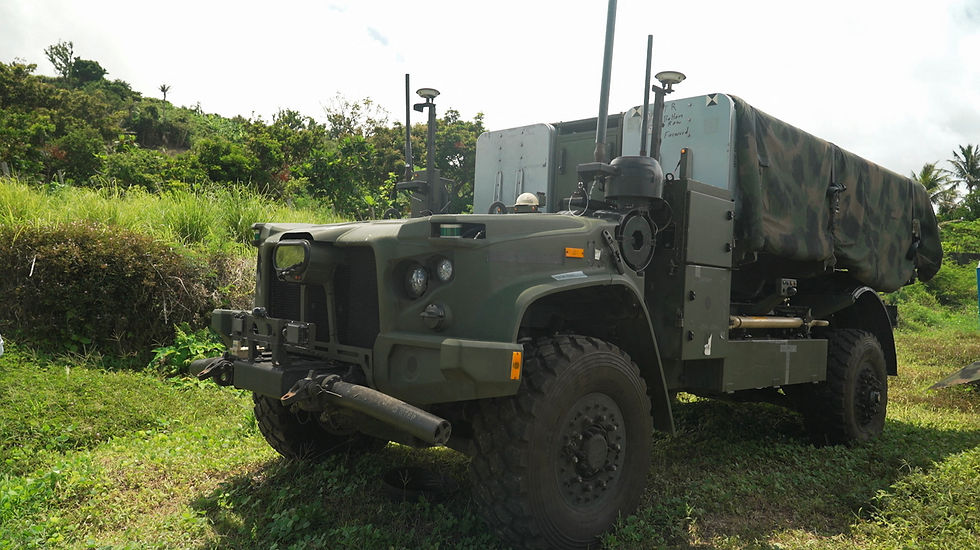
US, Philippines deploy anti-ship missile system in Batanes near Taiwan for war games

Nobel Peace Prize winner Narges Mohammadi in Iran hospital after 'cardiac crisis'
PARALUMAN NEWS
GET IN TOUCH
desk@myparaluman.ph
Tektite Towers (East), Exchange Road
Ortigas Center. San Antonio 1600
City of Pasig, NCR, Philippines
MENU
EDITORIAL STANDARDS
© 2025 Paraluman News Publication