

Politicians worldwide facing surge in violence and abuse, survey finds
Politicians worldwide are facing a surge in violence, threats and harassment, a survey published on Wednesday by the global Inter-Parliamentary Union found, warning that the trend, fueled by new technologies, could have major repercussions for democracy.
David Brunnstrom/Reuters
February 12, 2026
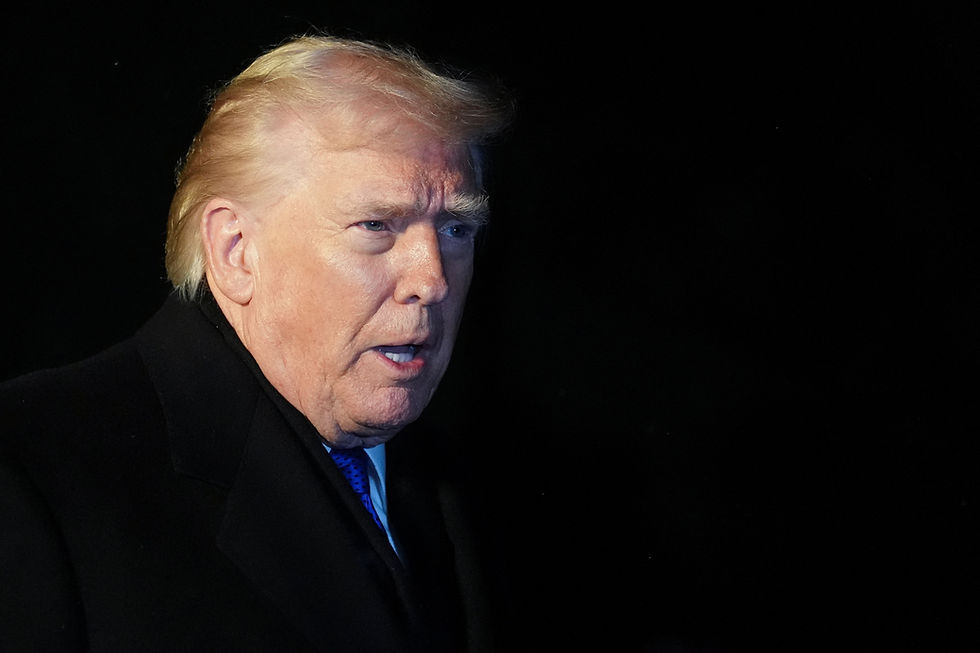
U.S. President Donald Trump walks towards Marine One for travel to Florida from the South Lawn of the White House in Washington, D.C., U.S., February 6, 2026.
Leah Millis/Reuters
WASHINGTON - Politicians worldwide are facing a surge in violence, threats and harassment, a survey published on Wednesday by the global Inter-Parliamentary Union found, warning that the trend, fueled by new technologies, could have major repercussions for democracy.
The IPU survey, mostly conducted in 2025, was based on questions submitted to lawmakers in more than 80 countries, with detailed questionnaires to 519 electedofficials in five - Argentina, Benin, Italy, Malaysia and the Netherlands - to provide a representative global picture.
The IPU, which groups 183 national parliaments, said 71% of all respondents reported experiencing violence from the public, particularly online. Women were more often the targets - disproportionately so when it came to sexualized forms of abuse.
"Lawmakers and parliamentarians around the world are facing a surge in intimidation," IPU Secretary-General Martin Chungong told a press conference at the United Nations headquarters in New York. "If the phenomenon ... is allowed to go uncontrolled, this will have major repercussions for democracy worldwide."
Chungong, a Cameroonian, said the situation in the United States was "very acute" and highlighted attacks against Pennsylvania Governor Josh Shapiro, the husband of former House Speaker Nancy Pelosi, and Congresswoman Ilhan Omar.
The United States has also seen assassination attempts against now-President Donald Trump, including a shot that hit his ear during his 2024 campaign for reelection.
Chungong said many lawmakers reported being more careful about what they say or write in the face of online abuse, given concerns for their personal safety.
The abuse had affected the willingness of some to engage publicly. "Over time, intimidation risks narrowing representation," Chungong said.
He said attacks on politicians were being fueled by new technologies, including artificial intelligence, and much online abuse and incitement was done anonymously and could involve state actors.
-Reporting by David Brunnstrom; Editing by Don Durfee and Lincoln Feast/Reuters
WASHINGTON - Politicians worldwide are facing a surge in violence, threats and harassment, a survey published on Wednesday by the global Inter-Parliamentary Union found, warning that the trend, fueled by new technologies, could have major repercussions for democracy.
The IPU survey, mostly conducted in 2025, was based on questions submitted to lawmakers in more than 80 countries, with detailed questionnaires to 519 electedofficials in five - Argentina, Benin, Italy, Malaysia and the Netherlands - to provide a representative global picture.
The IPU, which groups 183 national parliaments, said 71% of all respondents reported experiencing violence from the public, particularly online. Women were more often the targets - disproportionately so when it came to sexualized forms of abuse.
"Lawmakers and parliamentarians around the world are facing a surge in intimidation," IPU Secretary-General Martin Chungong told a press conference at the United Nations headquarters in New York. "If the phenomenon ... is allowed to go uncontrolled, this will have major repercussions for democracy worldwide."
Chungong, a Cameroonian, said the situation in the United States was "very acute" and highlighted attacks against Pennsylvania Governor Josh Shapiro, the husband of former House Speaker Nancy Pelosi, and Congresswoman Ilhan Omar.
The United States has also seen assassination attempts against now-President Donald Trump, including a shot that hit his ear during his 2024 campaign for reelection.
Chungong said many lawmakers reported being more careful about what they say or write in the face of online abuse, given concerns for their personal safety.
The abuse had affected the willingness of some to engage publicly. "Over time, intimidation risks narrowing representation," Chungong said.
He said attacks on politicians were being fueled by new technologies, including artificial intelligence, and much online abuse and incitement was done anonymously and could involve state actors.
-Reporting by David Brunnstrom; Editing by Don Durfee and Lincoln Feast/Reuters
TOP POLITICAL STORIES

Add a Title
Add a Title
Add a Title

ANALYSIS: Could a Supreme Court decision be the first step on the road to same-sex marriage?

QUOTES: Global reaction to the killing of Iran's Supreme Leader Ayatollah Ali Khamenei

Putin says the killing of Khamenei is 'cynical' murder
LATEST NEWS
Add a Title
Add a Title
Add a Title

Missile debris, panic buying jolt Dubai's aura of calm after Iran attack

CANCELED FLIGHTS: Lufthansa extends flight suspensions due to situation in Middle East

Pope Leo appeals for end to 'spiral of violence' after Iran strikes
GET IN TOUCH
MENU
EDITORIAL STANDARDS
© 2025 Paraluman News Publication