
Disruptions from Iran war affected supplies for malnourished children in Somalia
The war in Iran has triggered global shipping disruptions, and clinics treating severely malnourished children in Somalia have not been spared.
Abdirahman Hussein, Jefferson Kahinju, Mukelwa Hlatshwayo/Reuters
28 April 2026 at 08:18:11
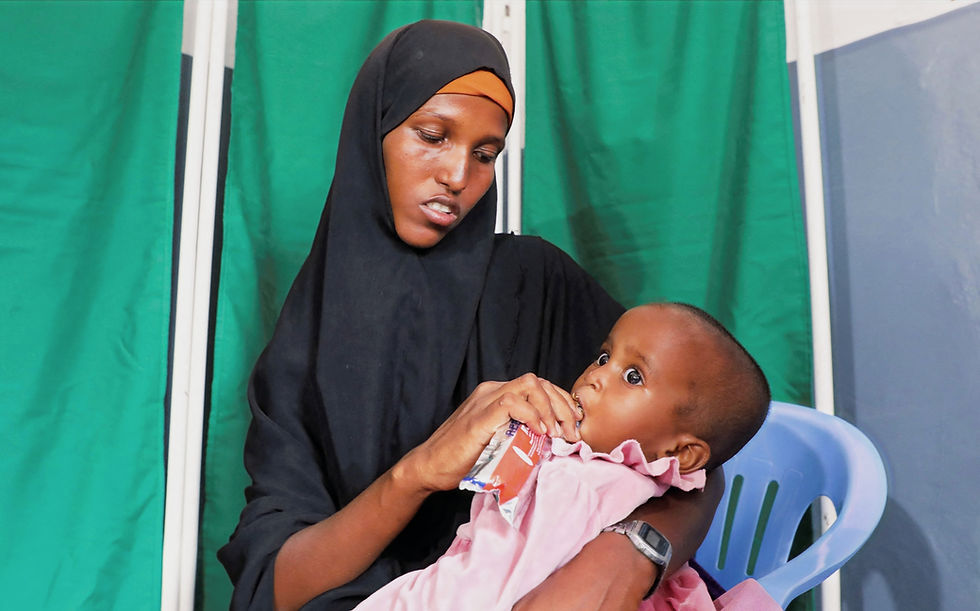
Fatima Mohamed feed Iqlas Omar Abdi, 1, with nutritious supplementary biscuit at the Daynile hospital as shortages of lifesaving therapeutic foods caused by shipping disruptions due to the Iran war have forced clinics treating severely malnourished children to turn away patients and ration supplies in drought-hit Somalia, in Daynile district of Mogadishu, Somalia April 20, 2026.
Feisal Omar/Reuters
The walk to a clinic in the southwestern Somali city of Baidoa is a familiar one for 38‑year‑old Muumino Adan Aamin.
In March, when she brought her 11‑month‑old baby, Ruweido, for treatment, health workers immediately put the child on a daily regimen of three sachets of life‑saving peanut paste, a nutrient‑dense, ready‑to‑use therapeutic food known as RUTF.
Muumino now lives in a camp for displaced people. Early last year, she was forced to flee her home.
“I fled because of drought, which caused hunger and lack of water, as well as flooding. That is why I came to settle in Dan Yar camp,” she said.
Previously, in 2017 Muumino was displaced by drought and almost lost her now 12‑year‑old daughter, who survived after being treated with the same peanut paste delivered by aid workers.
When Ruweido began showing similar symptoms, Muumino took action quickly.
“I noticed my daughter was unable to sleep and was ill. She became extremely thin, just skin and bones, which made me realise she was suffering from malnutrition.”
This time, however, the road to recovery for her youngest child is fraught with new challenges.
The war in Iran has triggered global shipping disruptions, and clinics treating severely malnourished children in Somalia have not been spared.
After supplies including life‑saving RUTF were stranded at a port in India, the International Rescue Committee (IRC) said it had to cancel an order worth $34,700, which could have helped children like Ruweido.
The clinic in Baidoa is not alone. Across Somalia, nearly half a million children under the age of five suffer from severe acute malnutrition, also known as wasting. In another clinic on the outskirts of the capital, Mogadishu, medical workers are sounding the alarm.
According to Xafsa Ali Hassan, supervisor of health and nutrition at Daynile General Hospital, treatment options for malnourished children are increasingly strained. Specialised milk F‑75 is the first line of treatment for children too weak to swallow RUTF.
“Some children’s nutritional status has already worsened,” she said.
Rahma Abdikarim, who brought her malnourished grandchild to the clinic, fears the consequences of supply shortages.
“My grandchild will be in a dangerous situation if RUTF, milk, and supplements are cut off; he will be on the brink of death,” she said.
As health workers confront the prospect of stock‑outs, aid agencies are scrambling to access life‑saving supplies, in some cases moving them from one clinic to another.
The IRC (International Rescue Committee) says it has recently secured stock from a supplier in neighbouring Kenya, hoping to avoid further delays.
Shukri Abdulkadir, a communications coordinator at the IRC, said delays linked to the war have compounded efforts to deliver urgently needed aid in Somalia.
“As IRC, we've seen this in real life happening, where we had a shipment of therapeutic food that we had sourced from India that was stuck at the port. And the shipment was stuck at the port mainly because of disruptions to the supply chain,” she said.
After the therapeutic food could not reach Somalia, the IRC turned to Amex Healthcare, a supplier to non‑profit organisations globally, which intervened with pre‑positioned stock. Its Africa general manager, Nigam Bhasvar, said the company had anticipated disruptions.
“If the war prolongs and the blockade continues, we anticipate disruptions in terms of suppliers not being able to hold prices because they are dependent on certain factors, with freight costs also going up." he said.
In Baidoa, Muumino told Reuters she was asked to return to the displaced persons’ camp when the peanut paste ran out. Hassan Yahye Kheyre, a nurse at the health centre, warned that shortages would accelerate both illness and hunger.
“When everything becomes scarce, diseases continue to rise, and malnutrition also worsens,” he said.
The supply disruptions caused by the war in Iran come at a time when Somalia can ill afford them. Humanitarian agencies are already reeling from years of drought and from cuts to foreign aid by the United States, Britain and other donors.
For the IRC and other aid organisations, it is another race against time to help communities like those in Baidoa access basic aid, with families already pushed to the brink.
“Somalia is really hard hit because people are still reeling from the impacts of the previous drought. And so this coming on top of that, it's very difficult for people to absorb these shocks.”
Production: Abdirahman Hussein, Jefferson Kahinju, Mukelwa Hlatshwayo/Reuters
The war in Iran has triggered global shipping disruptions, and clinics treating severely malnourished children in Somalia have not been spared.
LATEST NEWS

Add a Title
Add a Title
Add a Title

Archbishop of Canterbury: It was both a 'privelege and humbling' to meet Pope Leo
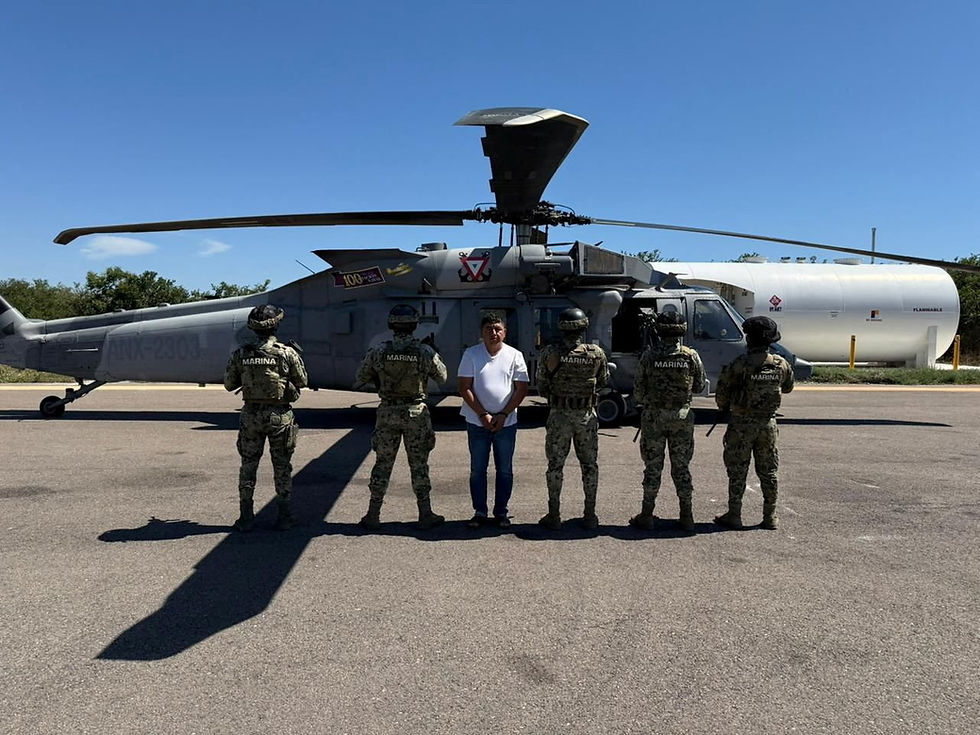
Special forces arrest top Jalisco drug cartel leader 'El Jardinero' in Mexico
Disruptions from Iran war affected supplies for malnourished children in Somalia
TOP SPORTS NEWS
Add a Title
Add a Title
Add a Title

NFL: Two days later, Mike Vrabel back with Patriots

BASEBALL: Cardinals rally in ninth to make Pirates' 6 2/3 perfect frames moot

NBA: Pat Riley plans to run Heat, not into retirement, at 81
PARALUMAN NEWS
GET IN TOUCH
desk@myparaluman.ph
Tektite Towers (East), Exchange Road
Ortigas Center. San Antonio 1600
City of Pasig, NCR, Philippines
MENU
EDITORIAL STANDARDS
© 2025 Paraluman News Publication