
FACTBOX: Profiles of the African countries Pope Leo is visiting
Pope Leo embarks on a 10-day African tour to Algeria, Angola, Cameroon, and Equatorial Guinea, highlighting regions with rich Catholic heritage amid political and social challenges. His visit will include peace efforts in Cameroon and engagements with communities shaped by history, conflict, and faith.
Alexander Dziadosz, Robbie Corey-Boulet, Amindeh Blaise Atabong, Miguel Gomes, Joshua McElwee/Reuters
9 April 2026 at 08:29:42

FILE PHOTO: Pope Leo XIV speaks to the media on the U.S.–Israeli conflict with Iran, as he leaves the papal residence to head back to the Vatican, in Castel Gandolfo, Italy, April 7, 2026.
Guglielmo Mangiapane/Reuters
Pope Leo leaves on Monday for a 10-day visit to Algeria, Angola, Cameroon and Equatorial Guinea. Here is background on the countries the pope is visiting.
ALGERIA
In 2019, Algeria's "Hirak" protest movement set in motion some of the most significant political changes in the country's recent history, ending President Abdelaziz Bouteflika's two decades in power and ushering in constitutional reforms.
Seven years on, the current president, Abdelmadjid Tebboune, retains considerable power, and critics argue that little has fundamentally changed.
Still, the country is one of the most stable in a volatile region that includes Libya and Sahel states such as Mali and Niger.
Economically, Algeria has benefited from higher global energy prices, with gross domestic product reaching about $270 billion in 2024.
Christianity flourished in the ancient Roman region that includes modern Algeria in the early centuries of the first millennium. Leo will visit Annaba, an eastern port city that was home to St. Augustine of Hippo.
The country of about 48 million people is now almost entirely Sunni Muslim, with Catholics numbering under 10,000, according to the Vatican.
CAMEROON
Cameroon has been ruled for more than four decades by Paul Biya, who at 93 is the world's oldest president. This will be his fourth time hosting a papal visit.
Biya, a Catholic, benefits from an entrenched patronage system, a loyal army and a divided opposition. He secured an eighth term in office in an election last October in which his closest challenger was once a spokesperson for his government.
U.N. sources told Reuters that Cameroonian security forces killed 48 civilians in the crackdown on subsequent protests.
Cameroon was a German colony until it was split between Britain and France after World War One. The oil- and cocoa-producing country faces grave security challenges.
In the north, it has been dogged for years by attacks by the Boko Haram insurgent group based in neighbouring Nigeria. In the two English-speaking regions in the west, there is a simmering Anglophone conflict that has left thousands dead since 2017.
Leo's visit is likely to bring fresh attention to flagging efforts to resolve that conflict, as he is scheduled to preside over a peace meeting at a cathedral in Bamenda, Cameroon's largest English-speaking city.
ANGOLA
After decades of bloody conflict in the 20th century, Angola became one of the leading oil producing nations in sub-Saharan Africa, with the sector accounting for some 95% of its exports.
The population of 36.6 million people is still confronting extreme poverty, with more than 30% living on less than $2.15 per day, according to the World Bank.
Angola gained independence from Portugal in 1975 after a 13-year war and was thrust afterwards into a 27-year civil war.
José Eduardo dos Santos ruled the country for 38 years. João Lourenço, a former defence minister, became president in 2017 and is due to complete his second term in 2027.
Lourenço has stressed a need to diversify Angola's economy but has faced mounting criticism over high unemployment, lack of democratic reforms and his human rights record. The government denies any rights abuses.
Portuguese remains the most spoken language. About 80% of the population identifies as Christian, and more than half as Catholic.
EQUATORIAL GUINEA
President Teodoro Obiang Nguema Mbasogo has been in power in Equatorial Guinea since 1979, making him the world's longest-serving president.
He presided over an oil boom which began in the 1990s and made U.S. oil companies among the country's largest investors. But as oil revenues decline, the economy of the former Spanish colony is now shrinking.
Widely derided as one of the most repressive countries in the region, Equatorial Guinea "frequently detains opposition politicians, cracks down on civil society, and censors journalists," according to Washington-based rights group Freedom House.
The government denies allegations of human rights abuses as well as corruption.
Reuters reported in January that Obiang's government had begun receiving third-country deportees from the Trump administration, forcing at least some to go back to their home countries even though they had received protections from U.S. immigration judges.
Leo is the second pontiff to visit the country, after John Paul II in 1982. More than 70% of the 1.8 million population identify as Catholic.
-Alexander Dziadosz, Robbie Corey-Boulet, Amindeh Blaise Atabong, Miguel Gomes, Joshua McElwee/Reuters
LATEST NEWS

Pope, in Spain, says world is crying for peace

Former First Lady of France, Bernadette Chirac, dies at age 93

Pope's message in his trip to Spain: Charity and respect for every human being'
TOP SPORTS NEWS
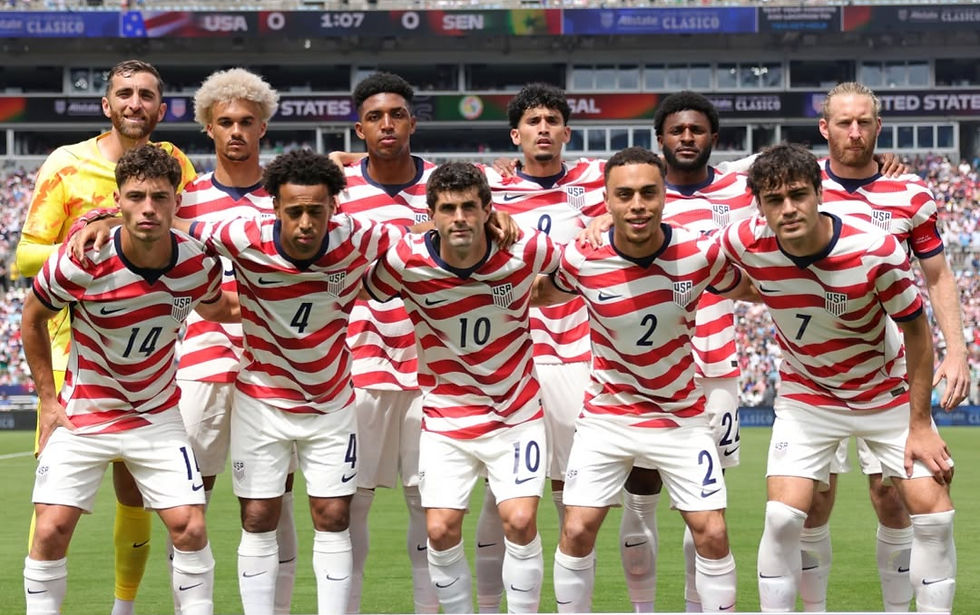
SOCCER: US get World Cup prayer as Pope Leo roots for the home team

SOCCER: Spain embrace favorites tag but De la Fuente warns World Cup offers no guarantees

TENNIS: Friends turn rivals as Zverev relishes Cobolli clash in Paris final
GET IN TOUCH
desk@myparaluman.ph
Tektite Towers (East), Exchange Road
Ortigas Center. San Antonio 1600
City of Pasig, NCR, Philippines
+63284298877
MENU
© 2026 Paraluman News Publication