
US officials skeptical of regime change in Iran after Khamenei's killing, sources say
U.S. officials remain skeptical that the recent killing of Iran's Supreme Leader Ayatollah Ali Khamenei will lead to an immediate regime change, citing the resilience of the country's hard-line leadership and lack of defections. While Washington continues military pressure, experts say any shift in Iran’s government will depend on internal support from its own people and institutions.
Gram Slattery and Erin Banco / Reuters
2 March 2026 at 02:16:35

FILE PHOTO: A woman holds on to a picture of Iran's Supreme Leader Ayatollah Ali Khamenei at the Enghelab Square, after he was killed in Israeli and U.S. strikes on Saturday, in Tehran, Iran, March 1, 2026.
Majid Asgaripour/File Photo/Reuters
Following the killing of Iran's Supreme Leader Ayatollah Ali Khamenei on Saturday, many senior U.S. officials remain doubtful that the U.S. and Israeli military operation will lead to a near-term change of government in Iran.
Before and after the attack, U.S. officials, including former President Donald Trump, suggested that toppling Iran's repressive regime was one of several objectives, alongside weakening the country's ballistic missile and nuclear programs.
“I call upon all Iranian patriots who yearn for freedom to seize this moment … and take back your country,” Trump said Sunday in a video posted on Truth Social.
However, three U.S. officials familiar with intelligence assessments said Iran’s opposition is unlikely to be strong enough to topple the theocratic, authoritarian system that has been in place since 1979.
No officials completely ruled out the possibility of a government collapse. Still, they said it is far from likely in the near term, despite Iran facing leadership losses from ongoing airstrikes and public discontent after violent crackdowns in January.
Earlier reports by Reuters indicated that CIA assessments presented to the White House suggested that even if Khamenei were killed, he could be replaced by hard-line figures from the Islamic Revolutionary Guard Corps (IRGC) or other conservative clerics.
A U.S. official said IRGC leaders are unlikely to surrender voluntarily, partly because they benefit from a patronage network designed to maintain internal loyalty. Previous intelligence also noted that no IRGC defections occurred during anti-government protests in January, which were met with brutal force. Defections would likely be necessary for any successful revolution, sources added.
Trump, meanwhile, said Sunday he plans to reopen communications with Iran, suggesting the U.S. does not expect the government to fall immediately.
Debate Among U.S. Officials
On Sunday, Iranian President Masoud Pezeshkian said a temporary leadership council, including himself, the judiciary head, and a Guardian Council member, assumed the duties of the Supreme Leader. Security chief Ali Larijani accused the U.S. and Israel of attempting to destabilize Iran and warned secessionist groups against taking action. State television also reported that recent airstrikes included the bombing of a girls’ primary school, though Reuters could not independently verify this.
U.S. intelligence officials have debated whether Khamenei’s death would shift Iran’s stance in nuclear negotiations or deter the country from rebuilding missile and nuclear capacities. Since January, Trump’s special envoy, Steve Witkoff, also held talks with Iranian opposition figure Reza Pahlavi, raising questions about potential U.S. support for an opposition-led government.
Senior officials have grown pessimistic that any Washington-backed figure could realistically take control. Jonathan Panikoff, former senior U.S. intelligence official, said, “Once U.S. and Israeli strikes stop, the success of the opposition will depend on whether the rank and file stand aside or align with them. Otherwise, the remnants of the regime, with weapons in hand, are likely to retain power.”
-Reporting by Gram Slattery in Murren, Switzerland, and Erin Banco in New York; Editing by Don Durfee/Reuters
LATEST NEWS

Pope, in Spain, says world is crying for peace

Former First Lady of France, Bernadette Chirac, dies at age 93

Pope's message in his trip to Spain: Charity and respect for every human being'
TOP SPORTS NEWS
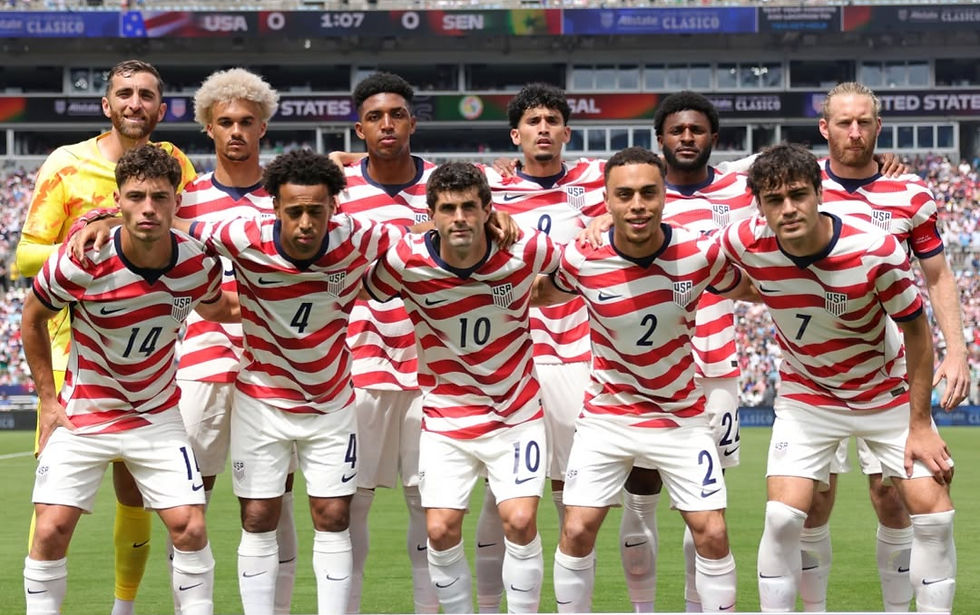
SOCCER: US get World Cup prayer as Pope Leo roots for the home team

SOCCER: Spain embrace favorites tag but De la Fuente warns World Cup offers no guarantees

TENNIS: Friends turn rivals as Zverev relishes Cobolli clash in Paris final
GET IN TOUCH
desk@myparaluman.ph
Tektite Towers (East), Exchange Road
Ortigas Center. San Antonio 1600
City of Pasig, NCR, Philippines
+63284298877
MENU
© 2026 Paraluman News Publication